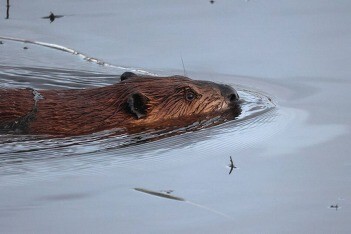
- Size: Beavers are the largest rodent in North America, making them bulkier and more robust than sleek otters or smaller muskrats and nutria.
- Tail: Beavers have a distinctive flat, paddle‑shaped tail, unlike the muskrat’s thin, rat‑like tail.
- Teeth: Beavers use their large front incisors to cut wood and build lodges made of branches, while muskrats typically build lodges from cattails and softer plant materials.
Kirkland’s shoreline parks and natural areas are full of remarkable wildlife. This month, we’re celebrating the hard‑working and always‑impressive beaver .
Beavers are common throughout Kirkland, especially along Lake Washington and in stream corridors such as Forbes, Denny, and Juanita creeks. Known as nature’s engineers, beavers build dams that create ponds and rich wetland habitats supporting diverse mammals, amphibians, birds, fish, and insects. They feed on plant material including the leaves, stems, and inner bark of trees like cottonwood, willow, and alder. They also use this woody material to build lodges for raising their young. Through their building and feeding, beavers help shape ecosystems in ways that benefit many species.
How to Identify
Telling beavers apart from river otters, nutria, and muskrats can be tricky, especially when they’re swimming. Here are a few helpful tips:
Where to Look
Beavers are mostly nocturnal, but it’s not unusual to spot them during the day, especially near their family groups. Their dams, wood lodges, slides, and narrow channels are all clues that beavers are nearby. In Kirkland, they’re frequently seen in shoreline parks such as Juanita Bay Park and Juanita Beach Park . They are also active at Totem Lake Park , in the Forbes Creek basin at North Rose Hill Woodlands Park , and at Edith Moulton and Windsor Vista parks along Juanita Creek.
Photo: Beaver at Juanita Bay, Chuck Guilford